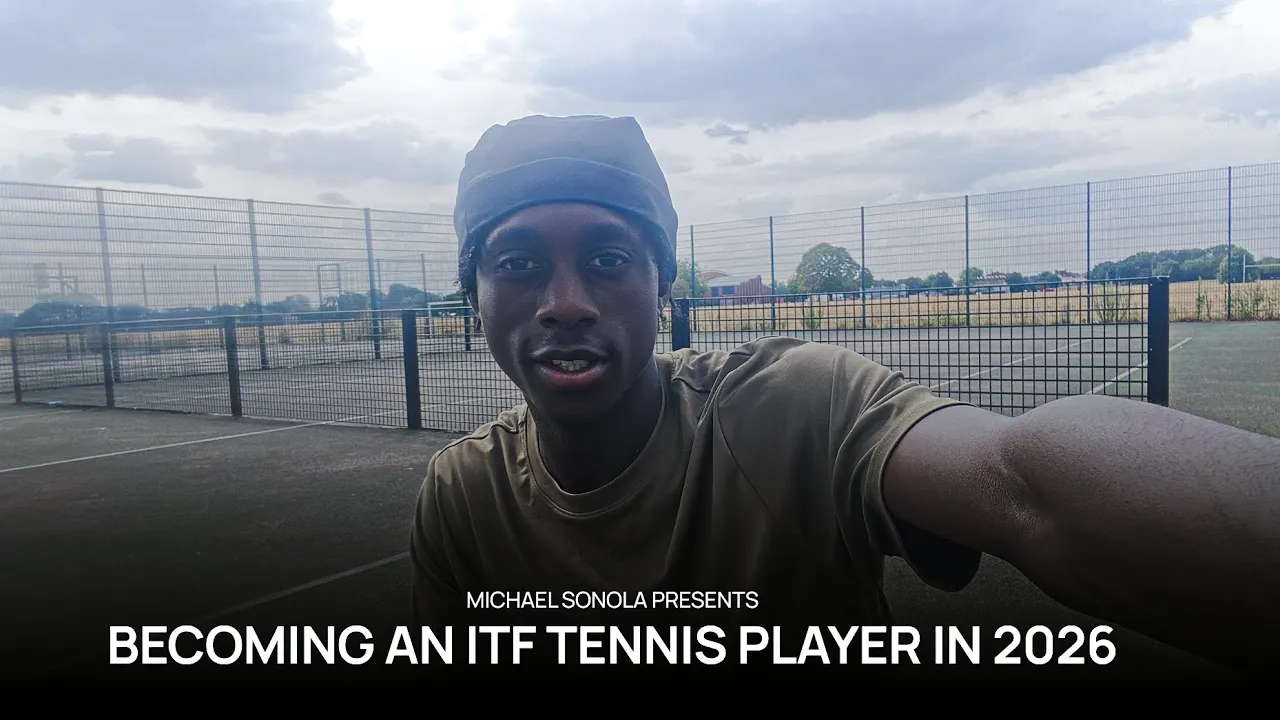
Michael Sonola On Becoming An ITF Tennis Player
Jul 27, 2026
Today I want to share the opportunity to talk about my experience in becoming an ITF tennis player and where professional tennis is going in the future.
#1 What do you mean by becoming an "ITF tennis player"?
The International Tennis Federation (ITF) is a global sport organisation dedicated in managing the regulations, operations, and competitions for professional tennis.
Similar to the NBA in basketball or F1 in motorsport, the ITF represents the global governing body for tennis players to ensure the highest standard of competition. It also acts a gateway to the ATP and WTA tours, allowing players to gain media coverage and participate in ongoing initiatives around the sport.
This is all possible thanks to a global ranking system created to give each player an equal opportunity to compete at the highest level. Even in third-world countries with no association to tennis -- you can still pick up a racket from day one and register into the ITF.
This is very different to other sports. Typically as an athlete you will need to get recruited or scouted to play into a national league before competing in the majors. But in tennis there are no gatekeepers or separate entities looking after their own interests -- it all comes down to your own commitment, resilience, and competence.
Regardless, most tennis players still face the same challenges that any other aspiring athlete faces. They still need to find sponsorship that supplies all the equipment and facilitates all the expenses during competition. They still need to build a team and a training program that works best for them. And what about balancing that with your lifestyle? How do you navigate the tension that comes with building a successful career?
#2 Why is this such a critical time?
Tennis is so much more than winning matches and breaking records. You've heard this before -- more and more tennis players are now beginning to realise their influence and prominence outside the court. Shaping communities. Connecting narratives. Building a legacy around a brand.
So much of this story revolves around social media. But over the years, there has been a steady rise in sports documentaries, giving fans an in-depth look into the player's personal lives -- far more deep than what you see on public stage or social media.
The best example I can think of is Rafael Nadal's four-part documentary series directed Zack Heizerling on Netflix. Here we see Nadal grow up in Mallorca, how he became a tennis prodigy at an early age, coached and shaped, for almost the entirely of his career, by his uncle Toni Nadal. More importantly, we also see the serious toll it had on Nadal's body and wellbeing.
These are the kind of stories that shape the way we interact with the sport. It sparks new conversations and -- more importantly -- paves the way for young aspiring athletes to take on the new challenge. After all, that's what inspired me to become a tennis player.
#3 What inspired you to become a tennis player?
The first time I ever picked up a tennis racket was at a little known tennis club in the sunny hills of Catalonia, Spain.
I still remember the day my dad took me out to try the new tennis racket I got for my 5th birthday. Right away there was a rush of excitement, to chase down every ball that came on my side. It was if the tennis court became my temple to protect.
Then there was the silence...
Beautiful.
Serene.
Soulful.
Nourishing.
Pure.
At that very moment, the whole world held it's breath. The only thing you could hear were the sound of my strings connecting with the ball, the rhythm of my feet, the beating of my heart.
Of course, I was nowhere near of being a prodigy. There was nothing special about the way I played. Until then I never had a real tennis session with a coach. It was mostly a way for my dad to express his deep interest in the sport, to experiment with different techniques, routines, and angles. That's what gave me so much freedom to play.
That philosophy stayed with me until I moved to the UK at 10 years and started competing in the LTA. Times have changed -- it was an opportunity to start taking the game more seriously. To slowly immerse myself in the world of competition.
Looking back on those challenging years playing 1-2 times a week and going out for tournaments over the weekend, they were crucial in my career. By the time I turned 16, I got enrolled into a premier tennis academy back in Barcelona, spending one full year to take my game to the next level. Now it's just a matter of perspective, patience, and poise. Or as the Zen master would say, to let the "muddy water settle".
There is only so much that skill, talent, and even effort can do in your career. So much so that tennis players will be forced to look at the bigger picture, beyond just winning titles and medals.
#4 How can tennis players remain influential in the coming years?
Leverage personal branding. This involves understanding the methods and strategies for players to leverage their personal platforms.
Challenge the "post-retirement crisis". Identify and create opportunties for tennis players to remain useful and productive well after their competitive career ends.
Focus on the long game. This could mean moving the conversation away from prize money and titles (which are often short-lived and sparks outrages) towards a more sustainable approach to protect your wealth and build a legacy.